In today’s fast-paced healthcare environment, where technology and complex medical demands increasingly affect patient care, nursing ethics and integrity continue to be the foundation of safe and compassionate care. Maintaining ethical standards is critical for new healthcare professionals—not just in theory, but in all clinical interactions.
Making informed decisions that uphold patient rights, preserve confidentiality, and promote responsibility, integrity, honesty and justice is the essence of nursing ethics. It also entails being a constant advocate for patient safety, preserving professional boundaries, and respecting the dignity of all individuals.
For new nurses, ethics and integrity are more than abstract concepts—they are critical daily practices that build trust, improve care quality, and strengthen your reputation as a responsible healthcare provider.
In this guide, we’ll explore the importance of ethical nursing practice, the real-world challenges faced by young healthcare workers, and practical ways to apply ethical principles confidently from the start of your career.
Ethics in nursing refers to the moral principles that guide behavior in clinical practice. This includes respect for patient autonomy, confidentiality, beneficence (doing good), non-maleficence (avoiding harm), and justice (Haddad & Geiger, 2023).
Integrity in healthcare is about being honest, accountable, and consistent with your values—even when no one is watching. It involves consistently adhering to ethical principles and values, demonstrating honesty, fairness, and trustworthiness in patient care and interactions. It is a core value that underpins the delivery of ethical healthcare and builds trust between providers and patients (Access Medicine, 2014).
Together, they shape the professional identity and credibility of a nurse.
Nurses are often the most visible and accessible healthcare professionals. When patients see that you act with honesty and professionalism, they feel safer and more respected.
Ethical decision-making protects patients from clinical errors and helps avoid legal consequences for individuals and institutions.
Young nurses who demonstrate ethical behavior in hospitals are seen as reliable, leading to more responsibilities and career advancement.
Ethical practice is the cornerstone of trust between nurses, patients, families, and society. Nurses often face complex decisions involving patient rights, consent, confidentiality, and end-of-life care. Acting with integrity means making decisions guided by professional standards—even in the face of personal or institutional pressure.
Kode Etik Keperawatan Indonesia (Indonesian Nurses’ Code of Ethics)
Permenkes No. 49 of 2013 on Nurse Competency Standards
Law No. 38 of 2014 on Nursing Practice
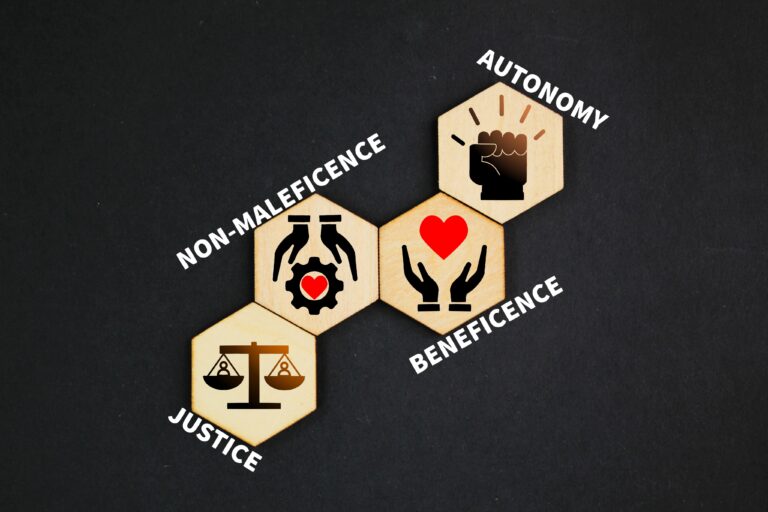
The Indonesian Nurses’ Code of Ethics, developed by the Indonesian National Nurses Association (PPNI), outlines several key principles:
Nurses must treat every patient equally regardless of age, gender, religion, socioeconomic status, or diagnosis.
Patients have the right to make decisions about their own care. Nurses must provide accurate information and respect their choices.
Nurses are obliged to act in the best interest of the patient—promoting health and well-being.
Nurses must avoid causing harm and take steps to prevent errors or neglect in patient care.
Resources and care must be distributed fairly. Nurses should advocate for underserved and vulnerable populations.
New healthcare workers may face challenges such as:
1. Ensuring patients receive informed explanations about procedures and consent
Example: A patient needs a transfusion. You explain it clearly and check for understanding before asking them to sign.
2. Protecting patient confidentiality by limiting case discussions to authorized staff
Example: You treat someone well-known. Another nurse asks for details. You say nothing because it’s not their case.
3. Respecting patient and family preferences in end-of-life care situations
Example: A patient has a “Do Not Resuscitate” order. The family objects. You follow the patient’s legal choice.
4. Reporting unsafe or unethical practices, even when it involves senior staff
Example: A senior nurse gives the wrong dose. You report it to protect the patient.
5. Balancing traditional or cultural practices that may conflict with modern medical guidelines
Example: A family refuses surgery. You bring in a mediator to help them understand the options.
6. Providing quality care amid resource limitations such as staff shortages or lack of equipment
Example: You have two oxygen tanks and many patients. You assess who needs them most and explain the delay to others.
7. Working in hierarchical environments where nurses feel reluctant to speak up
Example: You see a break in sterile prep. You speak up, even if you’re new. Your action prevents infection.
To handle ethical challenges, new nurses should consult clinical supervisors, ethics committees, and follow the PPNI Code of Ethics and national healthcare regulations. This support helps ensure ethical, respectful, and patient-centered care in every clinical setting.

Study and understand the Nursing Code of Ethics from the Indonesian National Nurses Association (PPNI) or the International Council of Nurses (ICN).
When in doubt, consult your supervisor, clinical mentor, or an ethics committee.
Integrity includes clear and honest nursing documentation. Avoid skipping or altering important records.
Provide non-discriminatory care, regardless of background, status, or belief.
Ask yourself regularly: “Was I fair, honest, and professional today as a nurse?”
Effective communication is the foundation for ethical nursing care. It is more than just giving directions or reporting to doctors. It also includes actively listening to patients, demonstrating empathy, and effectively expressing concerns. Poor communication can lead to misunderstandings, prescription errors, and even patient safety violations. Young nurses must also learn how to communicate properly under pressure, particularly in high-stress settings such as emergency departments and intensive care units.
💡 Tip: Practice using SBAR (Situation, Background, Assessment, Recommendation) when communicating with your clinical team.
Check Zafyre’s Effective Communication course here.

Nurses are more than just caregivers, they are patient advocates. This entails speaking up when something is wrong, such as when a patient is in danger, unsure about their care, or unable to speak for themselves. Advocacy also entails respecting patients’ decisions, even if they differ from what the nurse or doctor believes is best.
💡 Example: If a patient refuses a procedure, the nurse must respect their autonomy while ensuring the patient fully understands the risks and alternatives.
Ethical practice begins with the caregiver. A nurse who is exhausted, sleep-deprived, or emotionally tired may struggle to make sound ethical decisions. Self-care, such as getting enough sleep, setting boundaries, and seeking help, is not selfish; it is a professional obligation.
💡 Reminder: Self-care also includes recognizing signs of emotional distress, compassion fatigue, or moral injury and seeking help early.
Ethics is not static, it changes with laws, technology, and patient expectations. That is why being updated through CPD (Continuing Professional Development), workshops, webinars, or ethical case discussions is critical. Continuous learning ensures that nurses are using the most recent ethical standards and evidence-based methods in their treatment.
💡 Tip: Join professional organizations like PPNI or hospital ethics committees to stay updated and connected with peers.
👉 Stay updated in our upcoming course on Ethics and Integrity!
Your nursing journey in Indonesia will be filled with both routine duties and ethical decisions. What will set you apart is your ethical character. As a young healthcare professional, leading with integrity builds a legacy of trust, compassion, and excellence in nursing.