 ER and ICU staff
Prehospital and medical evacuation teams
Nurses, doctors, and clinical staff who manage trauma and cardiac emergencies
New clinicians who want a strong foundation
Experienced providers who need skill refreshers
Immediate life support (BLS): compressions, AED use, airway basics, team roles
Trauma care: primary/secondary survey, bleeding control, shock recognition, stabilization
Respiratory and circulatory emergencies: recognition and first-line management
Cardiovascular crises: rhythm recognition and quick action steps
Evacuation and transport: safe movement, documentation, communication
Burn care: first aid, assessment, referral criteria
Triage: prehospital and in-hospital flow during both routine and mass-casualty events
E-learning (theory): self-paced modules with case examples and quick checks
Simulation & assessment: scenario-based practice for decision-making under pressure
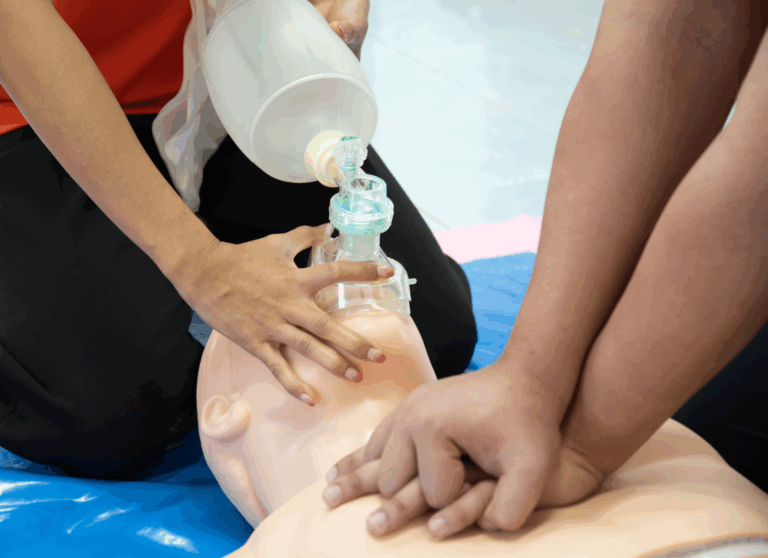
Hands-on practice: skills stations for airway, bleeding control, CPR/AED, immobilization, safe transport
Feedback & coaching: focused debriefs to turn knowledge into habit
Practical and measurable: checklists, skillsheets, scenario rubrics you can use on shift
Team-ready: communication frameworks and role clarity for smoother teamwork
Globally aligned, locally relevant: standards that fit Indonesian clinical settings
Learner-friendly: modern e-learning design, clear visuals, mobile-ready
Builds ConfidenceHelps healthcare workers respond quickly and calmly in critical situations.
Standardizes Clinical SkillsEnsures all participants follow both national and international emergency care guidelines.
Provides Official RecognitionBTCLS certification is accredited by PPNI and includes CPD credits (SKP) that support career growth and professional compliance.
Prepares for Real EmergenciesCase-based simulations mirror real-life trauma and cardiac scenarios, helping participants apply their knowledge with accuracy.
Rapid primary assessment and stabilization
Hemorrhage control: pressure, tourniquet, wound packing
Airway adjuncts and oxygen delivery
High-quality CPR with AED and two-rescuer coordination
Safe patient packaging, transfer, and documentation
Assessment & recognition
Mode: Online theory + in-person skills labs
Duration: Flexible theory, intensive practical sessions
Location: Zafyre Training Center
Language: Bahasa Indonesia & English